OLED Display Set (128x64 + 128x32)
Image Gallery
Overview
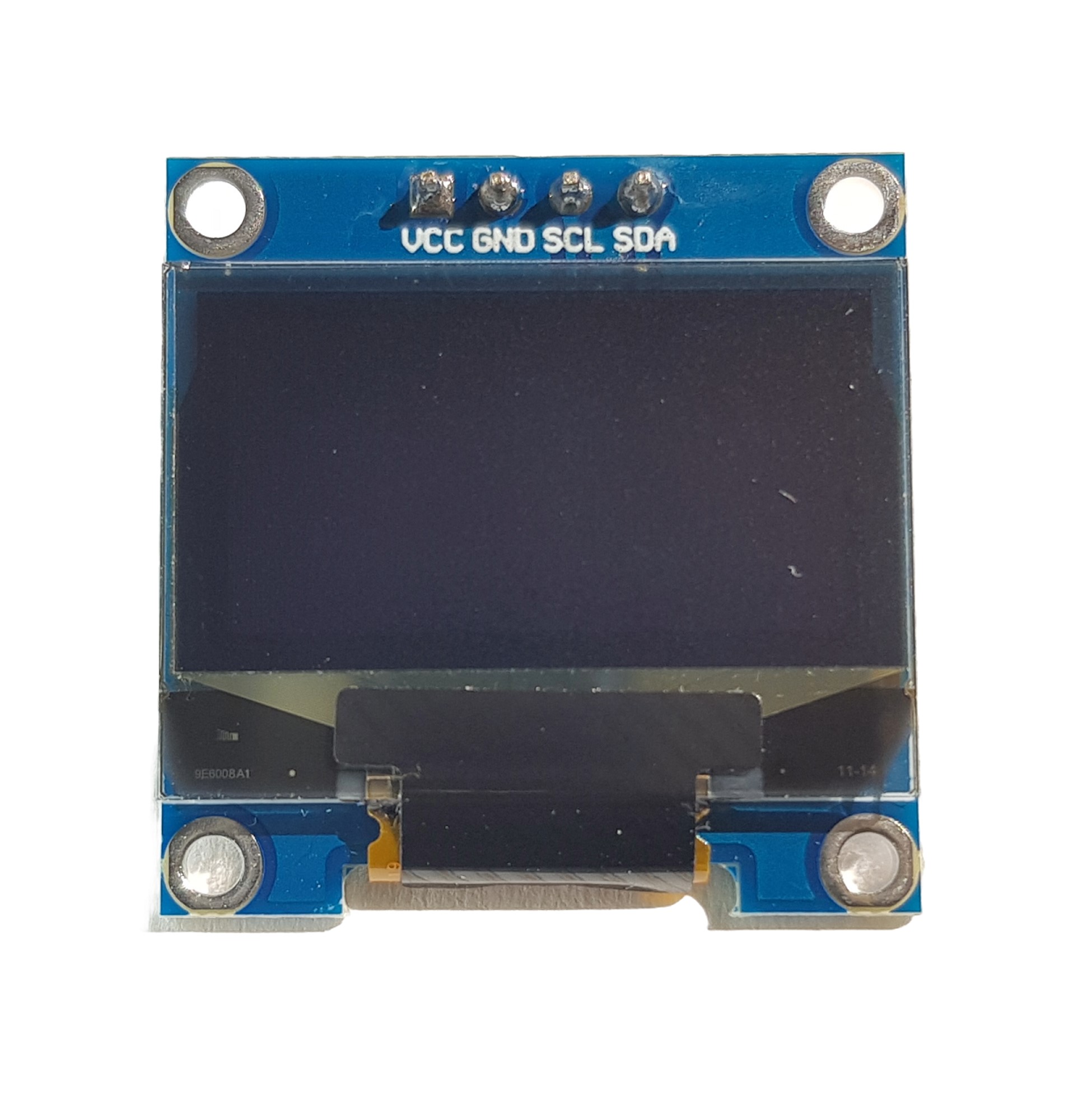
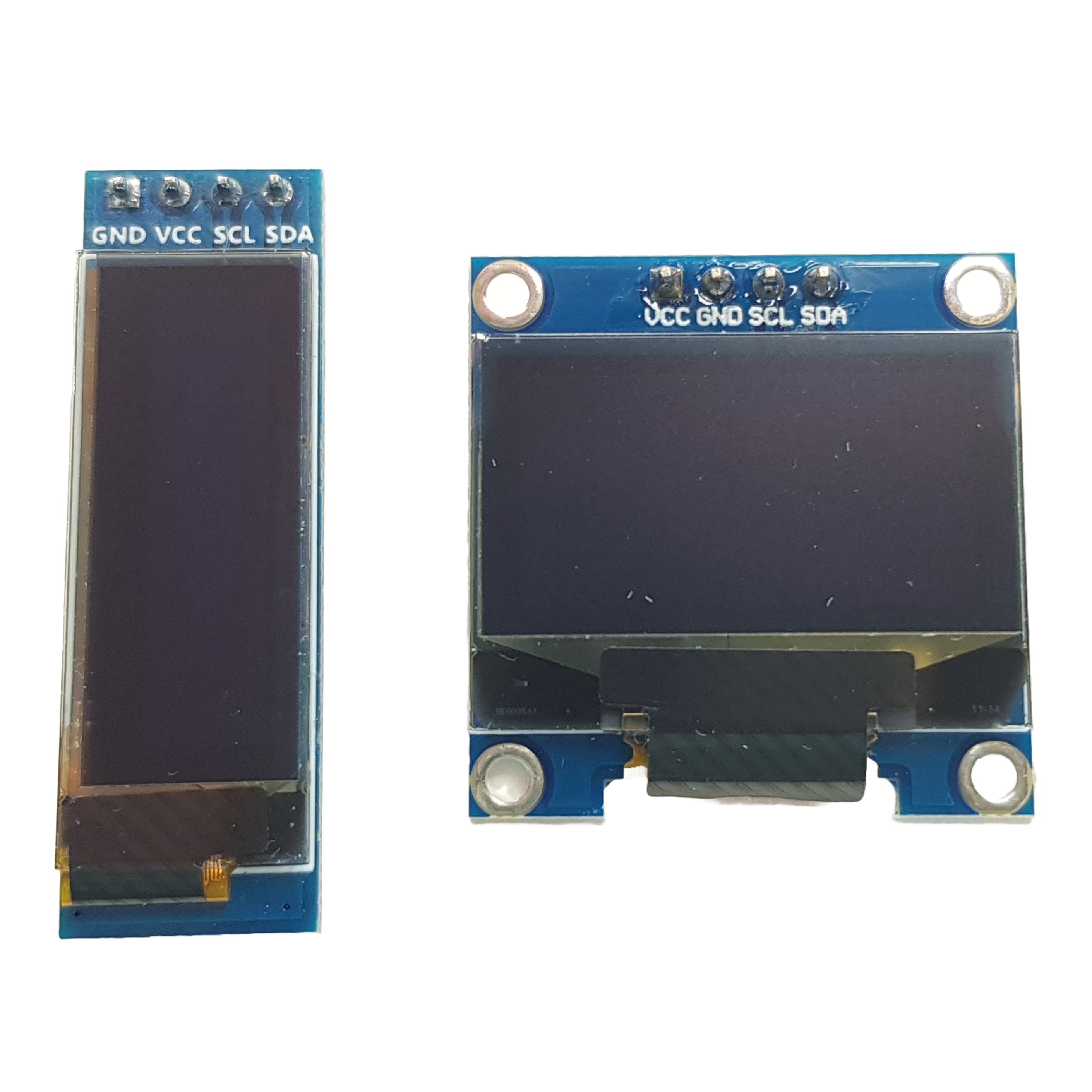
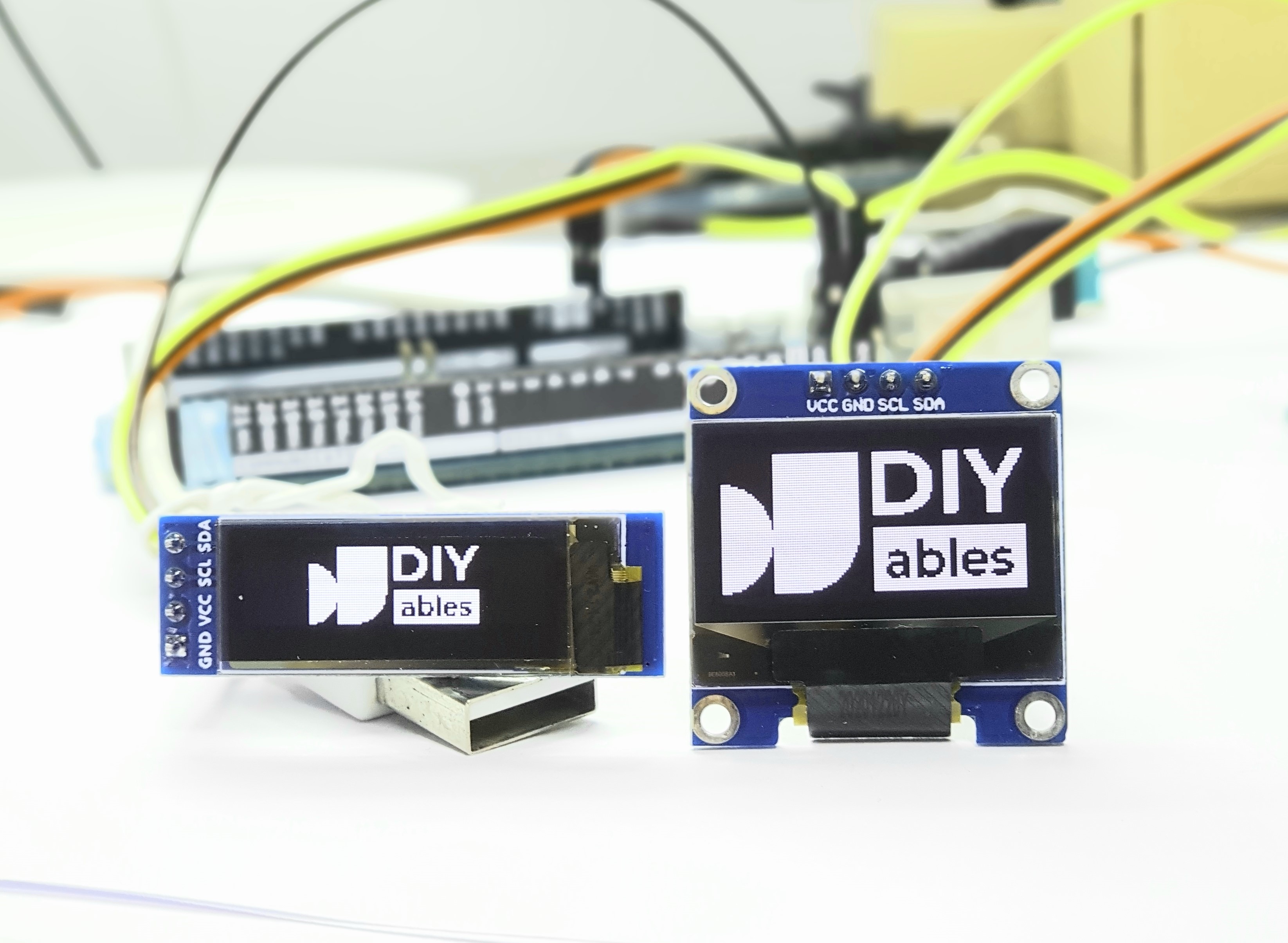
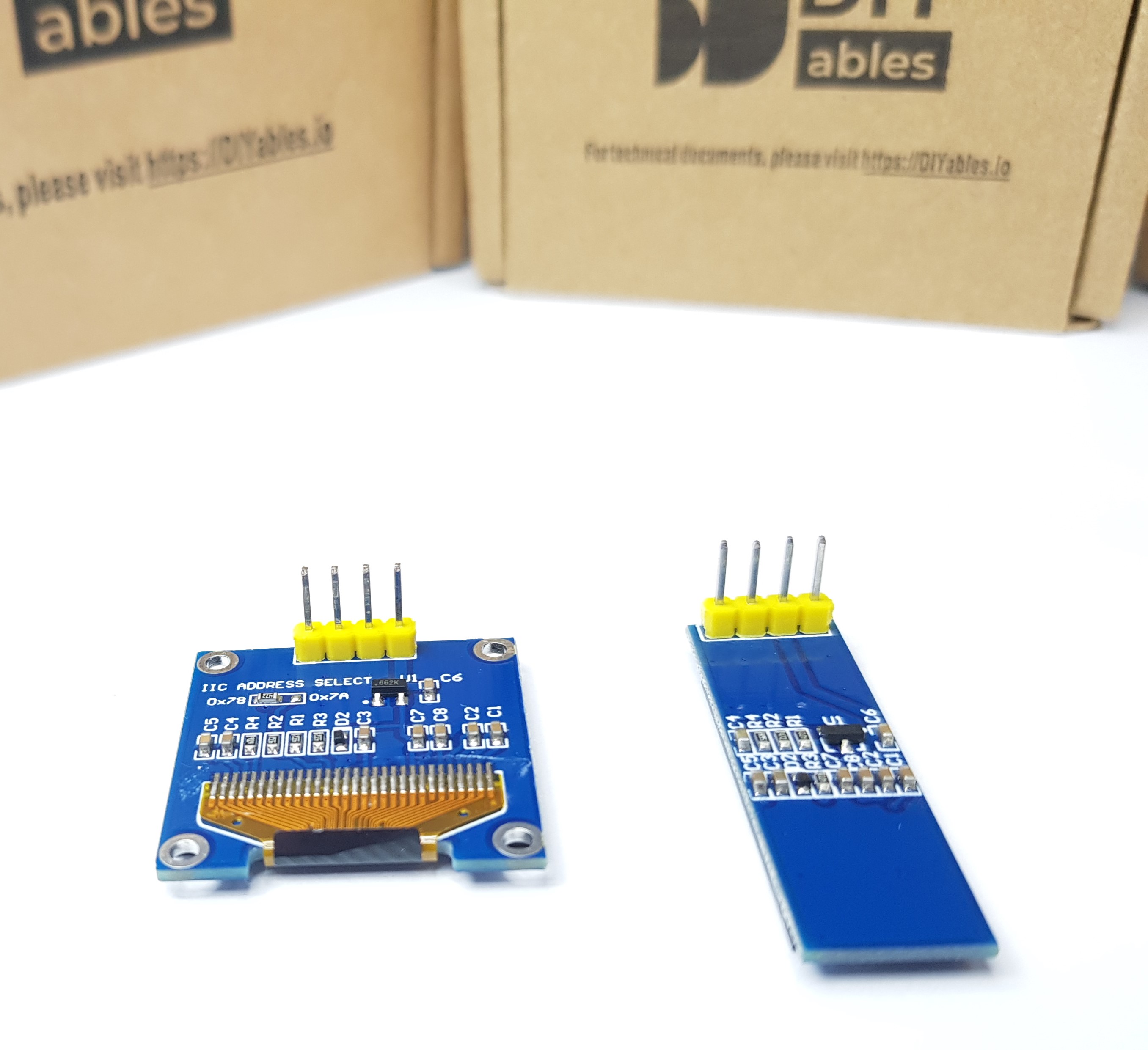
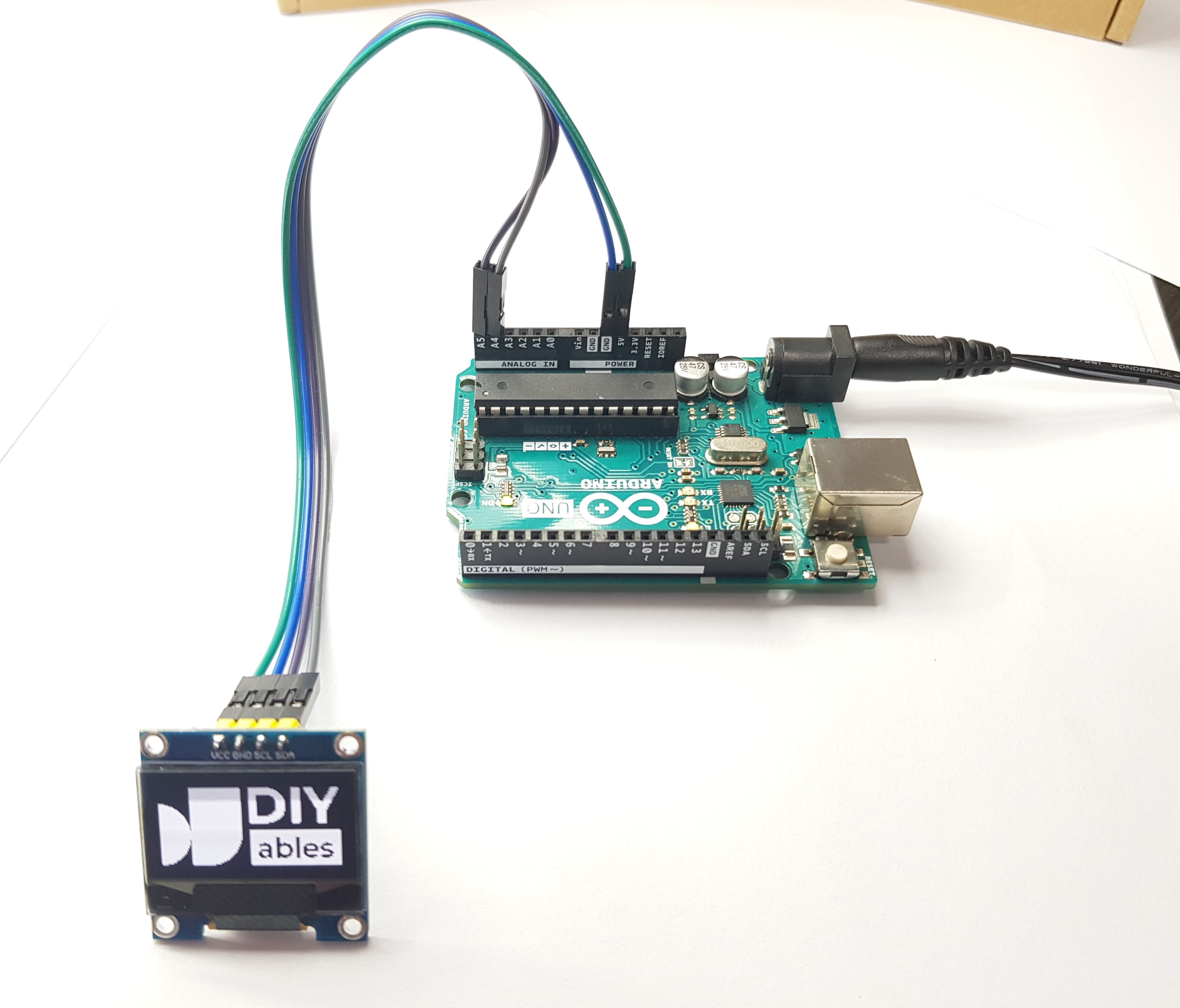
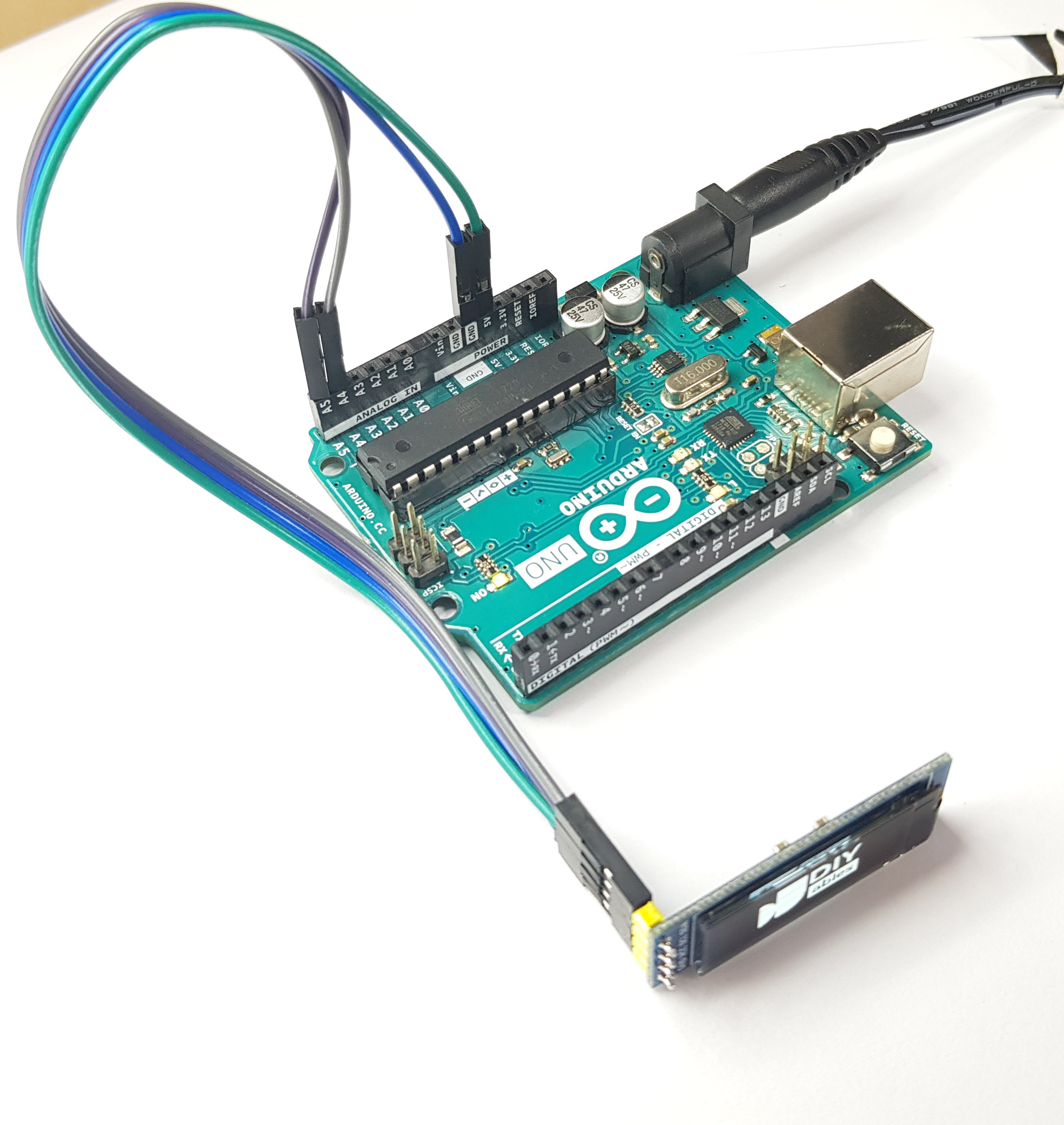
The DIYables OLED Display Set bundles one 0.96-inch 128×64 OLED and one 0.91-inch 128×32 OLED into a single package. Both modules use the SSD1306 driver over I2C at address 0x3C, and both display white pixels on a black background. Self-luminous OLED technology means no backlight is required, and power consumption scales with the number of lit pixels. Both modules are compatible with the Adafruit SSD1306 library with no configuration differences.
Quick Overview
| Property | Value |
|---|---|
| Package Contents | 1× OLED 128x64 (0.96") + 1× OLED 128x32 (0.91") |
| Driver IC | SSD1306 (both) |
| Interface | I2C (both) |
| I2C Address | 0x3C (both) |
| Display Color | White on black (both) |
| Operating Voltage | 3.3V – 5V (both) |
| Dimensions (128x64) | 27.0mm × 27.0mm × 4.1mm |
| Dimensions (128x32) | 38mm × 12mm × 4.1mm |
| Viewing Angle | >160° |
| Power Consumption | 0.08W (full screen, each) |
| Operating Temperature | −30°C to 70°C |
Key Features
Two Sizes, One Package
Get both common OLED sizes in one order for prototyping and choosing the right fit for a project.
SSD1306 — Wide Library Support
Both modules work with Adafruit SSD1306, U8g2, and other popular libraries without driver changes.
Self-Luminous — No Backlight
Each pixel generates its own light. Blacks are true black; contrast is extremely high even in darkness.
3.3V and 5V Compatible
Operates from either voltage, making it compatible with Arduino, ESP32, ESP8266, and Raspberry Pi without level shifting.
Technical Specifications
| Parameter | 128×64 (0.96") | 128×32 (0.91") |
|---|---|---|
| Resolution | 128 × 64 pixels | 128 × 32 pixels |
| Screen Size | 0.96 inch | 0.91 inch |
| Dimensions | 27mm × 27mm × 4.1mm | 38mm × 12mm × 4.1mm |
| Driver IC | SSD1306 | SSD1306 |
| Interface | I2C | I2C |
| I2C Address | 0x3C | 0x3C |
| Color | White on black | White on black |
| Voltage | 3.3V – 5V | 3.3V – 5V |
| Power (full screen) | 0.08W | 0.08W |
| Viewing Angle | >160° | >160° |
| Operating Temp | −30°C to 70°C | −30°C to 70°C |
Pinout
Both modules share the same 4-pin I2C connector.
| Pin | Label | Description |
|---|---|---|
| 1 | VCC | Power supply — 3.3V or 5V |
| 2 | GND | Ground |
| 3 | SCL | I2C clock line |
| 4 | SDA | I2C data line |
Getting Started
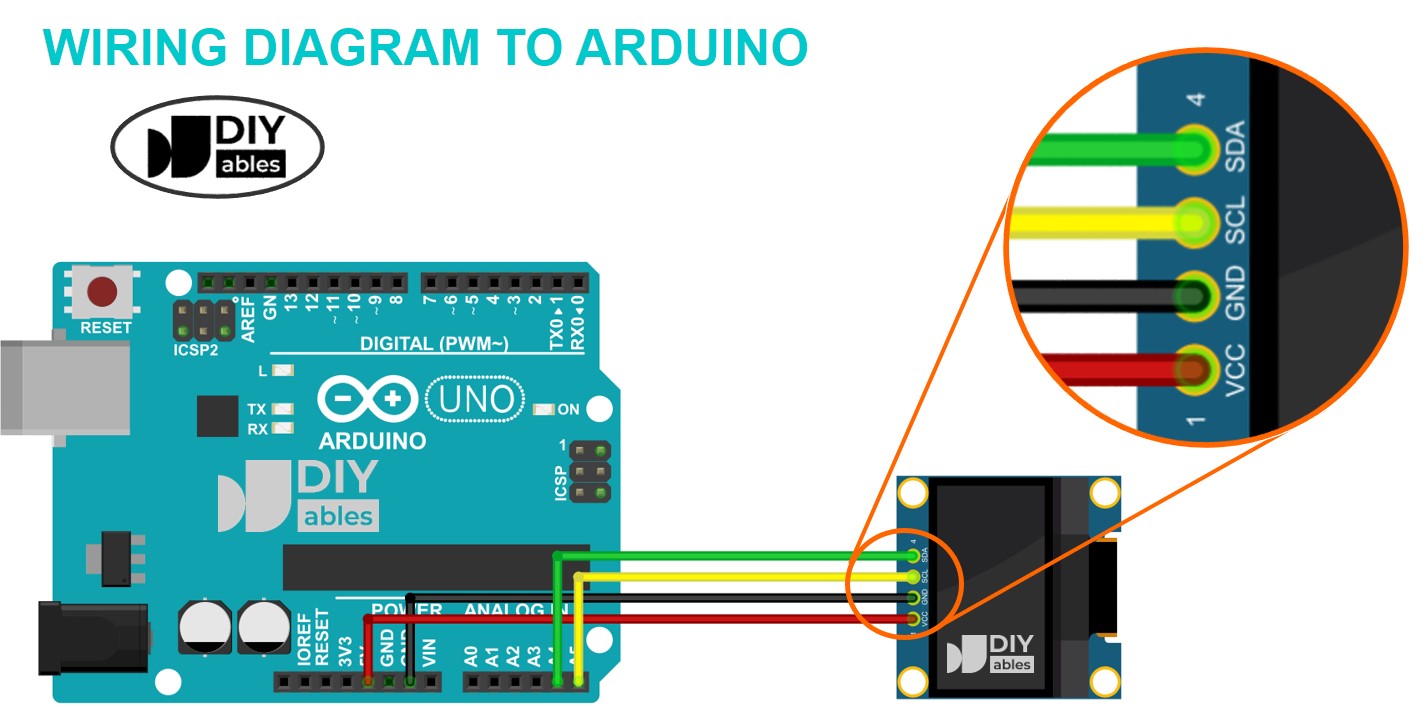
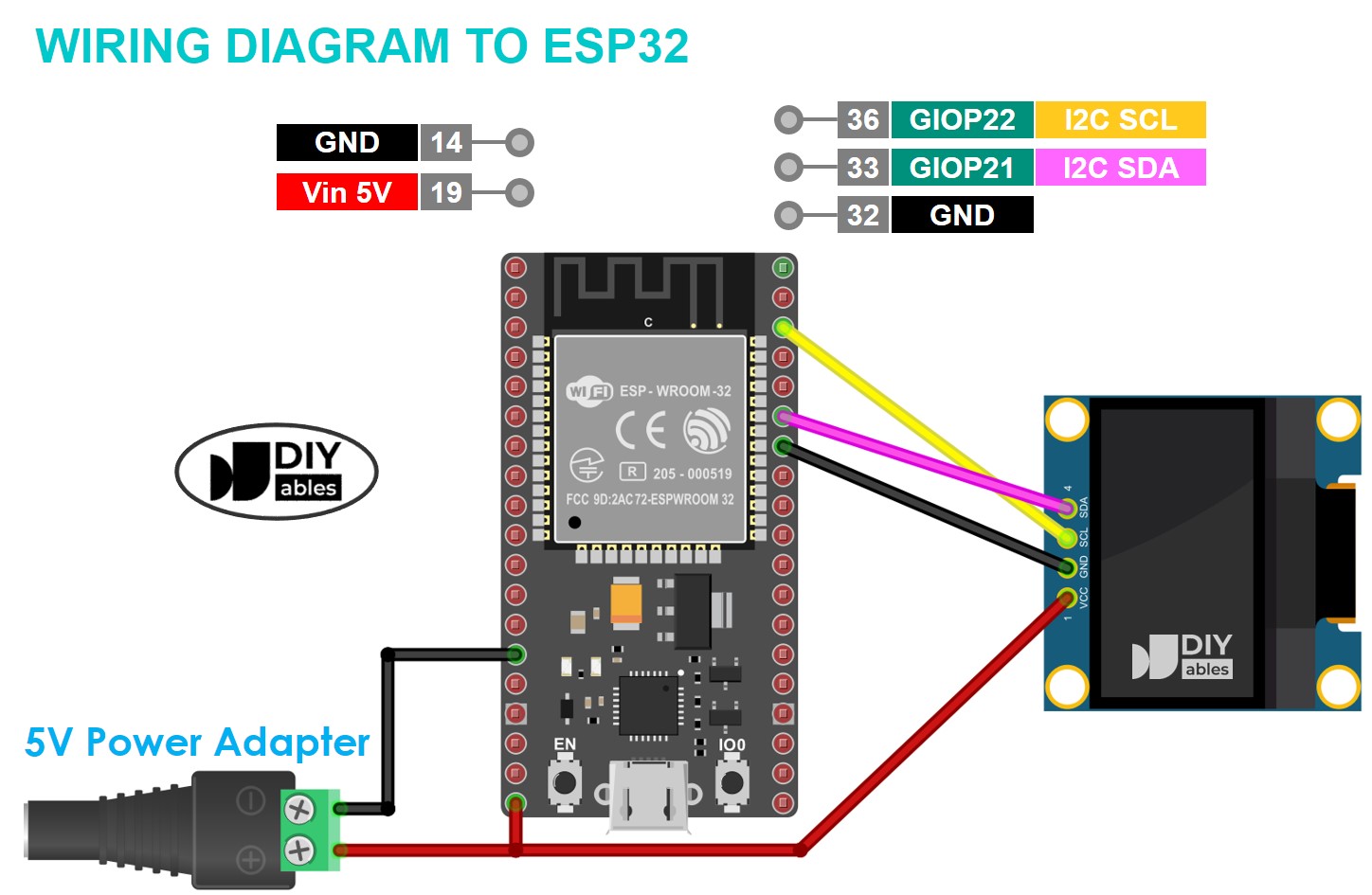
Wiring (Arduino Uno / Nano)
| OLED Pin | Arduino Pin |
|---|---|
| VCC | 5V |
| GND | GND |
| SCL | A5 |
| SDA | A4 |
Libraries
Applications
- Sensor data display (temperature, humidity, pressure)
- Wearable electronics
- Compact IoT status screens
- Menu interfaces
- Clocks and timers
- Portable instruments
Equivalent Boards
| Module | Key Difference |
|---|---|
| OLED 128x64 (single) | Same 0.96" display sold individually |
| OLED 128x32 (single) | Same 0.91" display sold individually |
| 2.4" OLED SSD1309 | Much larger panel, same protocol |
| LCD I2C 16x2 | Character-only, requires backlight, 5V |
Beginner Tutorials
Notes
- Both modules use address 0x3C by default. To put both on the same I2C bus simultaneously, one must be changed to 0x3D via solder jumper.
- OLED burn-in: avoid displaying a static image for extended periods.
- U8g2 library uses page-buffer mode — uses as little as 16–32 bytes of RAM, better for Arduino Uno/Nano.
Community
Revision History
| Version | Date | Notes |
|---|---|---|
| v1.0 | 2026-06 | Initial entry |